
Learn About Our Process
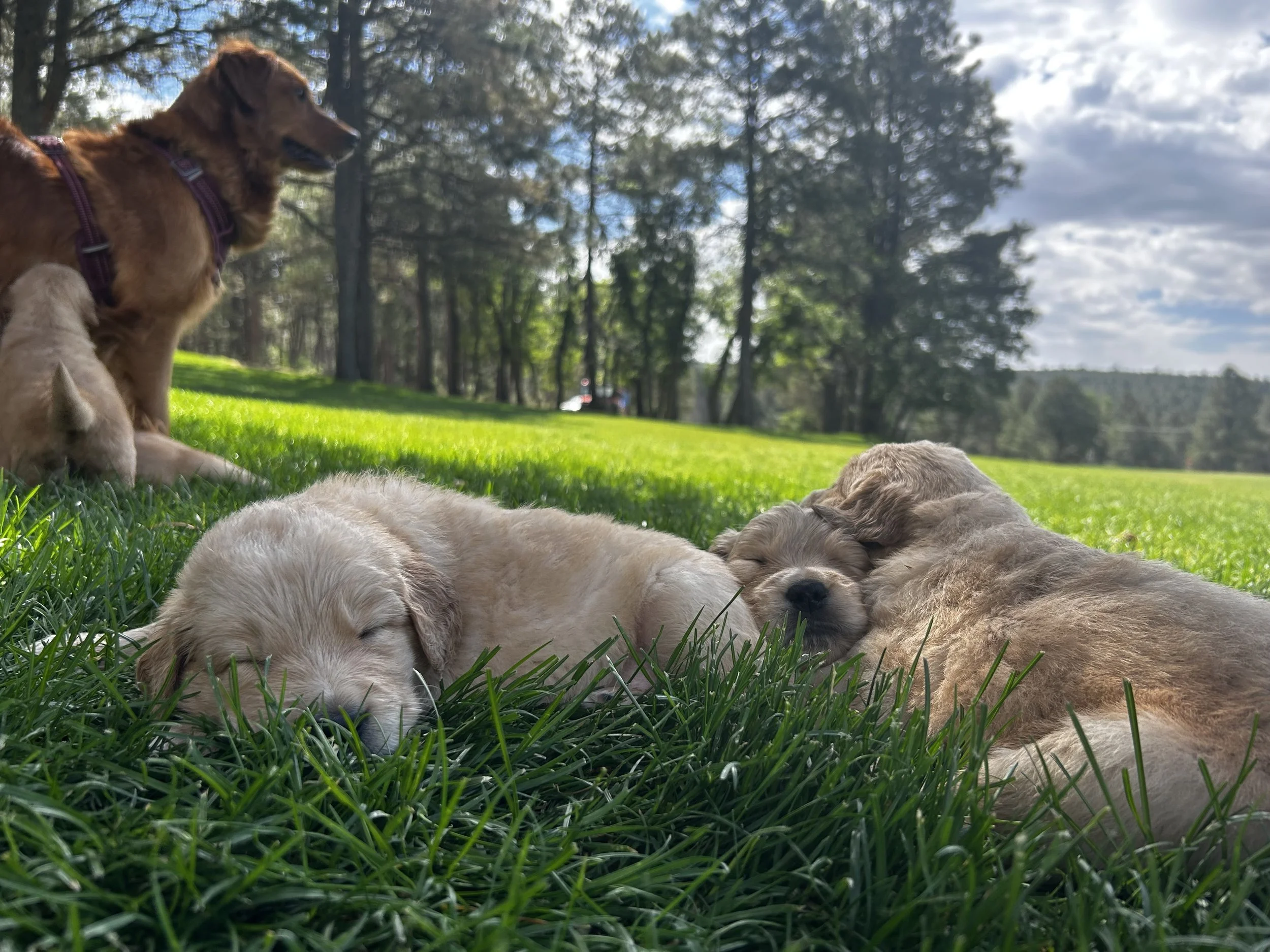
We've developed a specific training program of our own, built from a number of established protocols that are backed by research and known to produce real, measurable results in early development. We run every puppy through this program starting on day 3.
The goal is simple: a puppy with a solid foundation for a family to build on. We can't promise this will be the easiest puppy you've ever trained, and we can't promise they won't come home still being, well, a puppy. What we can promise is that every puppy goes through the same structured process, every day, starting two days after birth once they've had time to settle into the world.
Our Mamas
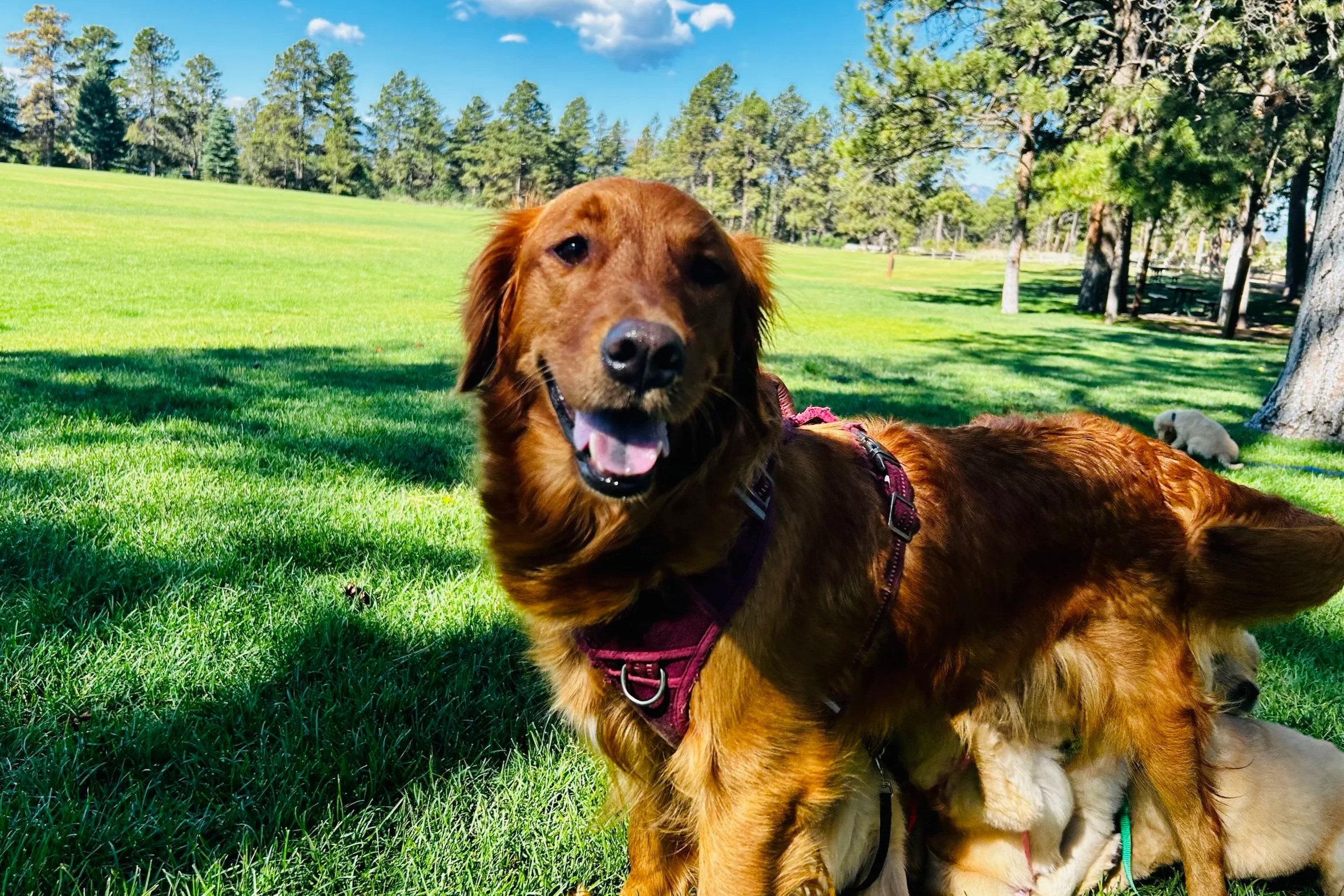
This process starts before conception. Every mother is evaluated to make sure she's truly ready to carry and raise a litter well, not just physically able to.
Our girls eat high quality food throughout their lives, not just during pregnancy and nursing, though we do ramp things up once a litter is on the way. Beyond that, we follow her lead. She's trusting her instincts and caring for her babies the best she can, and we trust those instincts too, so we care for her in return. If she's done with kibble and only wants chicken, we'll grill some up. If she wants puppy formula instead of water, she gets it. We get up every two hours through the night, or however often she needs, because she's doing the hard work. Dogs feel many of the same emotions we do, and nursing takes as much out of them emotionally as it does physically. When a mama hits something like the baby blues, we sit with her, we love on her, and we make sure she knows she isn't doing this alone. She's carrying something none of us could do ourselves, and we don't take that for granted. We never pressure her back to her puppies. She always goes back on her own, and she always cares for them well.
Our mamas live in our home. They're part of our family, they come on our adventures, and they're loved and well trained long before they're ever bred. We believe that shows up in how they raise their puppies, and we prioritize their health over how many litters we could otherwise produce.
The First Month
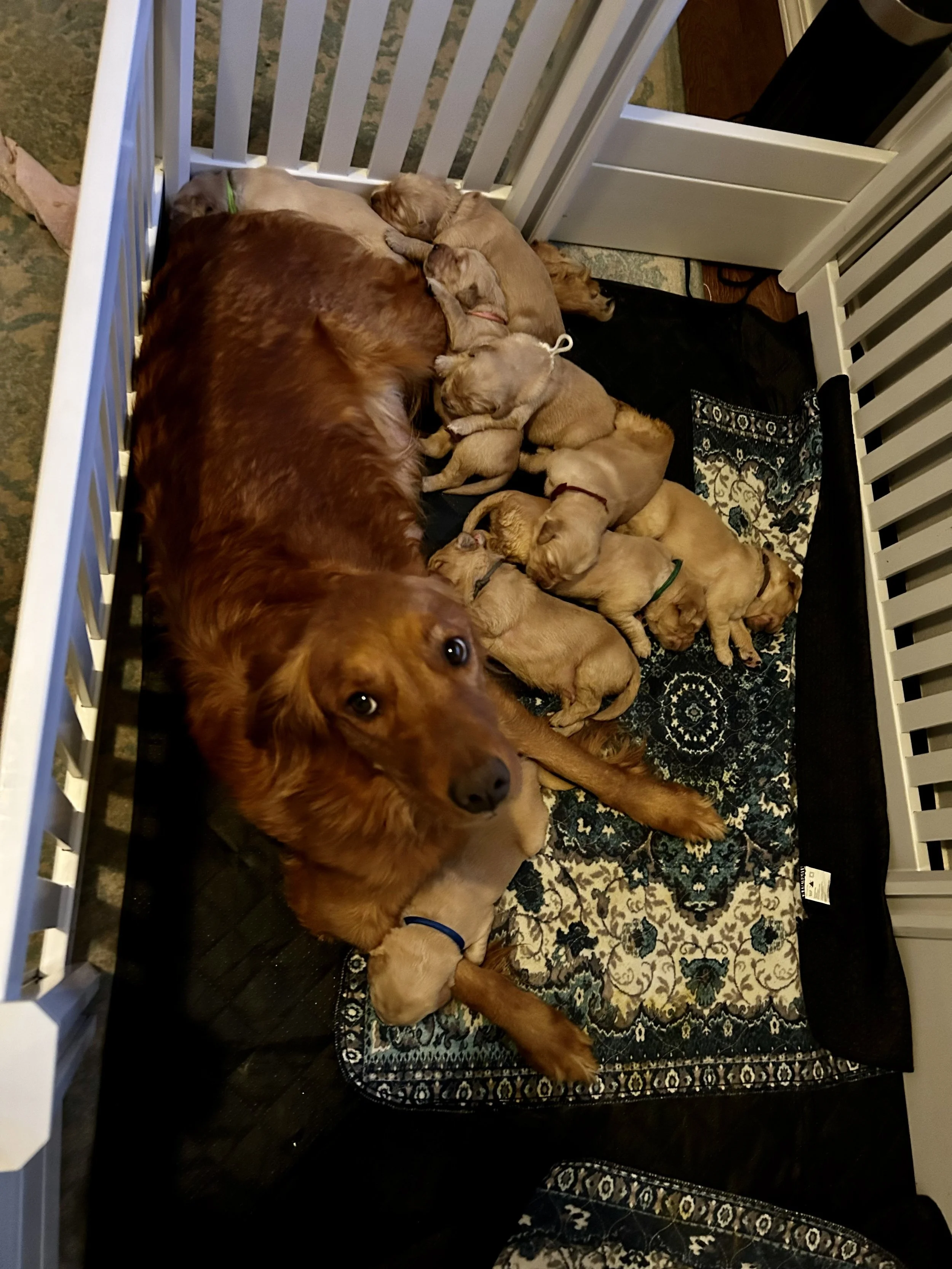
From the first days, we begin work that's establishing new neural pathways, building stress tolerance and resilience that puppies carry with them for life. This window only exists once. It can't be repeated or made up for later, which is part of why we take it so seriously.
That overlaps with a handling routine that gets every puppy comfortable with being touched, held, and examined, the kind of comfort that makes vet exams, grooming, and nail trims something they tolerate easily rather than dread.
By the end of the first month, we begin layering in a structured socialization protocol, introducing new surfaces, new places, and new people. This continues into the second month until it's complete.
The Second Month
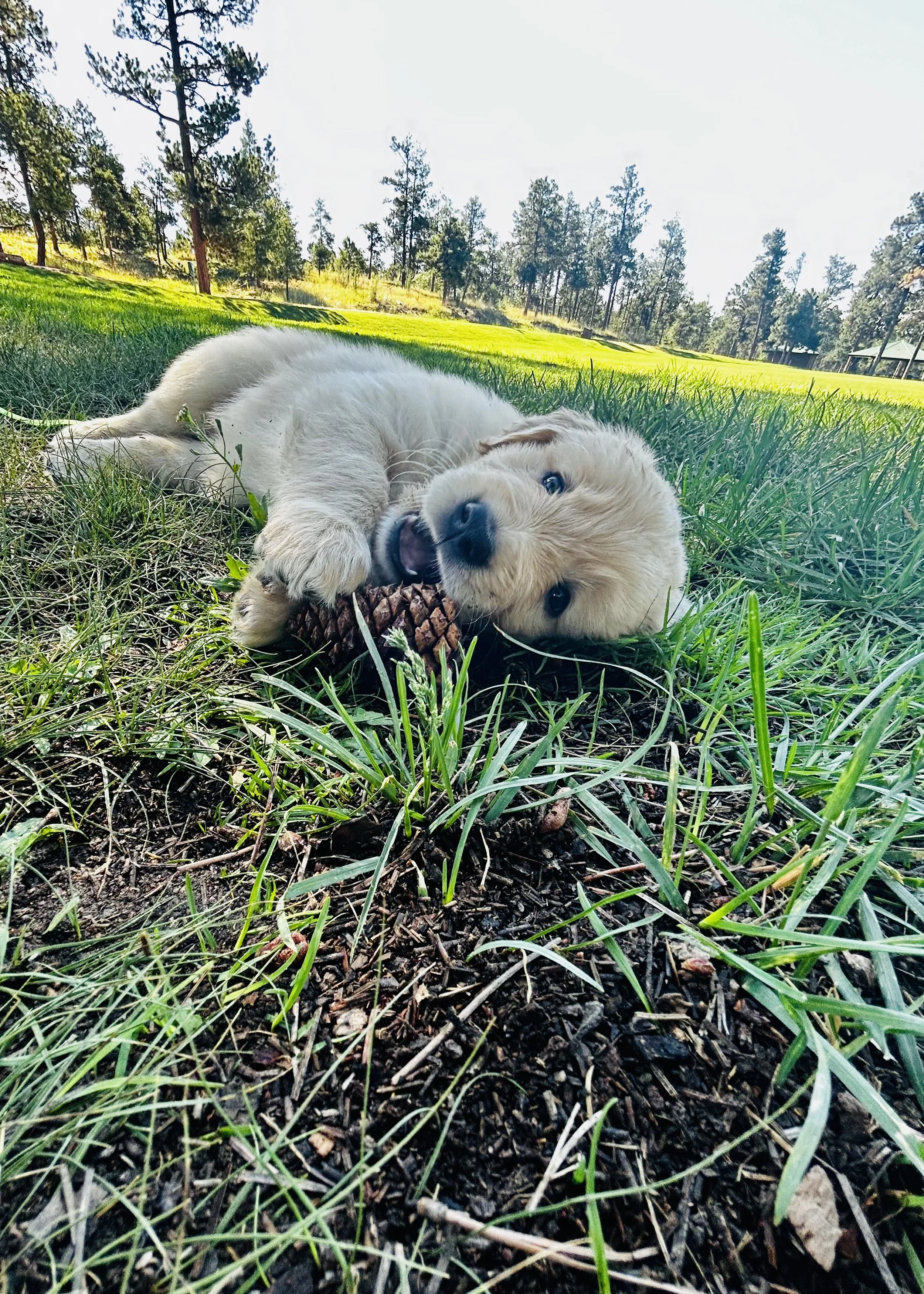
This is where families start to see results they can recognize day to day. We begin basic manners, crate training, potty training, bite inhibition, broader socialization, and car rides, so that by the time a puppy comes home, settling in is far easier than starting from nothing.
Every puppy has their own profile, built out from day one. We track their development, note their personality, and write down the small moments that tell us who they are. We name them early and know them by name, well enough to speak to each one in real detail rather than generalities. We can tell a family, before pickup, that their puppy struggled with crate training and what helped. That one of the nine barely eats and does better free fed. That one is more confident around kids than littermates, or settles better with another dog already in the home. It isn't about who's cutest. It's about sending a family home with a puppy they actually understand, not just one they picked.
The process closes with a structured temperament evaluation, done by someone the puppies don't know well, in an unfamiliar setting. That, combined with everything tracked along the way, becomes a written summary every family takes home. Not a generic packet. Specific to their puppy.
Why we stay small
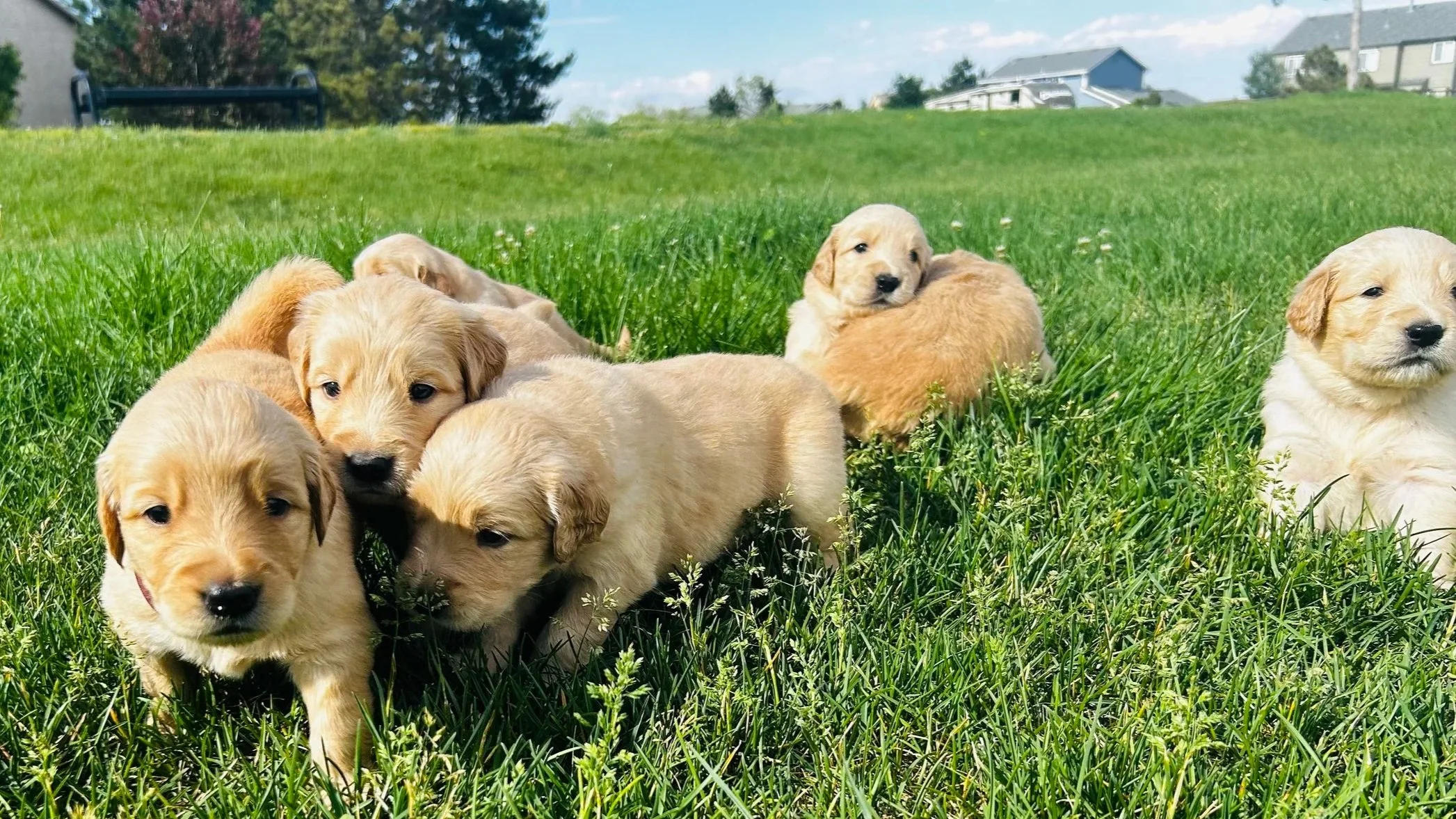
We cap ourselves at three litters a year, not because we couldn't manage more, but because this process doesn't scale past that without becoming something else. Every extra puppy is another puppy who needs the same individual attention, the same daily tracking, the same hours of handling, and at some point that's no longer possible to do well. We'd rather raise fewer litters at the level we're proud of than more litters at a level that's just good enough. That's the whole difference between what we do and what a lot of families have already learned to be wary of, and it's not a tradeoff we're willing to make.